


Tips
Cash on delivery abroad: where it works, what it costs and when to switch it off
Cash on delivery is a regional service in Europe, not a continental one. GLS supports five destinations, DPD added Slovak parcel shops in June 2026. Local ceilings, currency rules, remittance spreads and why a refused parcel costs several times more across a border.

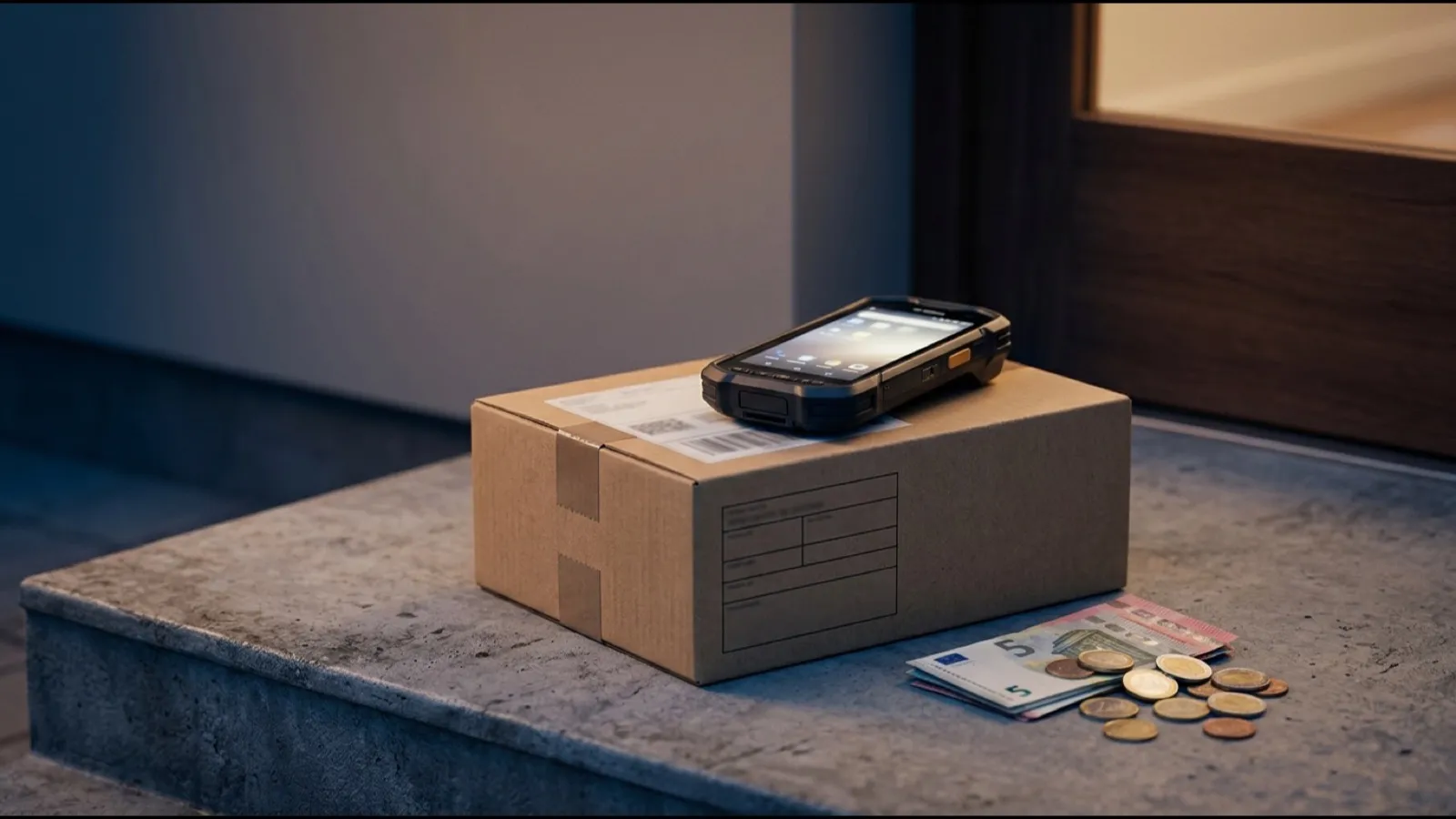
Cash on delivery looks like an easy way to lower the barrier for a hesitant customer. Nothing is paid up front, the money changes hands at the door or at the parcel shop, and one objection disappears from the checkout page. The moment you try to carry that logic across a border, however, you meet a fact that most guides skip: COD is not a European service. It is a regional one.
It works in a narrow band of neighbouring markets and thins out quickly the further you go. This article maps where you can actually get it, what it really costs, and when you are better off not offering it at all.
The map is smaller than you expect
Start by reading the destination list of the carrier you already use. It tends to be soberer than the marketing copy.
GLS supports cash on delivery into Slovakia, Hungary, Slovenia, Romania and Croatia, plus its domestic Czech network. Five markets. No Germany, no Austria, no France. DPD covers Slovakia and, since 1 June 2026, also handles COD on parcels routed to Slovak parcel shops and lockers under its Shop2Shop and Pickup services; before that, COD was limited to home delivery. Western Europe, broadly, is prepaid territory: Germany, the Netherlands and the Nordics moved to bank transfer, card and invoice-after-delivery years ago, and shoppers there do not expect a cash option.
Brokers and aggregators are the surprise. You would assume that pooling many carriers widens the coverage. In practice it often narrows it. A broker may ship to 187 countries and still enable COD in only one or two of them, because collecting money is a separate contractual arrangement in every jurisdiction. Delivery reach and payment reach are two different maps, and the second one is always smaller.
The practical rule for a merchant: verify COD availability for the exact combination of country and service level, never for the carrier as a brand. A carrier that supports Romania does not necessarily support Romania on the product you have configured.
Ceilings are local, and they are not round numbers
Your domestic COD limit tells you nothing about the cross-border one. Every market carries its own ceiling in its own currency. At GLS the picture looks like this:
| Destination | Maximum COD amount |
|---|---|
| Slovakia | €2,655.51 |
| Hungary | HUF 499,995 |
| Slovenia | €2,000 |
| Croatia | €1,659.04 |
| Romania | RON 5,000 |
| Czech Republic (domestic) | CZK 60,000 |
The odd figures with cents are not typos. They are older national-currency ceilings converted into euros and left in the tariff exactly as the conversion produced them. Slovenia rounded its limit; Slovakia and Croatia did not. The lesson is the same either way: check the ceiling for the destination rather than assuming a tidy number. On higher-value orders that line is not theoretical, and a Croatian shipment reaches it sooner than most people expect.
The direction of travel across the industry is downward. Several national postal operators have tightened COD ceilings recently, partly as a defence against customers who send COD parcels to themselves to farm card cashback or shuffle money off credit cards. If your business model leans on high-value COD, treat today’s ceiling as the optimistic case.
The money comes back slowly, and not all of it
This is the part merchants underestimate, because it happens after delivery, when the order already feels closed.
For euro destinations the COD amount has to be declared in euros. A sender-currency figure will simply be rejected, which means your pricing has to be settled in the destination currency at checkout, not improvised on the label. The collected cash then sits in the carrier’s dedicated account and is remitted without undue delay after delivery. On that return journey it passes through bank transfer charges and an exchange-rate conversion, either of which can change the value that lands in your account.
Most carriers let you choose whether settlement happens in the destination currency or in your home currency. It is a one-time setting that then quietly eats into margin on every order, so it deserves a deliberate decision rather than a default. If euro COD is remitted to a euro account, the conversion can be skipped entirely, and that is normally the cheapest configuration available.
Budget for three separate costs, not one: the COD surcharge itself (around €1.96 per parcel into Slovakia at GLS), any percentage taken from the collected amount, and the spread lost on remittance. Count only the first and cross-border COD looks considerably cheaper than it is. Platforms like Sendcloud expose these fees per carrier before you commit, which is one reason to route cross-border volume through a shipping platform rather than direct contracts.
A refused parcel hurts more across a border
Non-collection rates in Central European e-commerce run between 3 and 10 per cent of shipments, with a typical store sitting at 3 to 5 per cent a month; above five per cent it is worth active intervention. Now carry that percentage across a border.
The refusal rate itself does not change much. The cost of each refusal does. A domestic return means you pay transport twice over a short distance and the stock is back on the shelf within days. A refused parcel in Romania means paying international transport twice, waiting considerably longer, and having cash and inventory frozen throughout. The same percentage translates into a several-fold larger loss.
Legally you have a case. Under EU consumer sales rules as implemented in national civil codes, a buyer who orders goods is obliged to accept and pay for them, and refusing a COD parcel is a breach of contract that entitles the seller to compensation. Pursuing €40 from a consumer in another member state, though, usually costs more than the loss itself. Plan for prevention rather than enforcement.
What actually works: a verified phone number and email address on every cross-border order, since some carriers will not process a home delivery without them; an order confirmation in the recipient’s own language; and a value threshold above which COD is simply not offered at checkout. On an expensive international order, prepayment is a cheaper safeguard than any insurance policy — though insurance still matters for the goods themselves.
When to switch COD off
Some cases answer themselves.
- Anything outside the EU. Customs clearance comes first, and the recipient has to settle duty and VAT before the parcel is released, which leaves no clean point for a courier to collect the purchase price. The mechanics are covered in the guide to customs and VAT on international shipping.
- Orders above a few hundred euros, where the risk-to-fee ratio tips and prepayment is simply cheaper.
- First-time customers in a market you do not otherwise serve.
- Any destination whose currency you do not hold an account in, where conversion spreads will erode the margin.
- Fragile or made-to-order goods that may not come back in a resaleable condition.
Romania deserves a footnote. Since 1 January 2026 a logistics fee of RON 25 (roughly €5) applies to parcels valued up to €150 arriving from outside the EU. Intra-EU senders are unaffected, but if part of your catalogue is drop-shipped from Asia it lands on the final price the customer sees, on top of any COD surcharge.
What to take away
Three things, if nothing else:
- Central Europe is a different market from the rest of the continent. Slovakia, Hungary, Poland, Slovenia, Romania and Croatia still run meaningful COD volumes, and carriers have built for it. Coverage there is close to domestic quality.
- Every one of those markets needs its own configuration. Local ceiling, declared currency, settlement currency and remittance route all differ, and none of them inherit from your home setup.
- Treat the rest of Europe as prepaid. It is not a concession; it is the norm your customers there already expect, and it removes an entire class of operational risk.
Before switching COD on for a new destination, work through the fundamentals in the guide to sending a parcel abroad, and compare the two carriers most often weighed against each other for Central European routes in GLS versus DPD. If you are running a store rather than sending one-off parcels, the shipping setup guide for EU merchants covers checkout configuration. And if you are unsure which service fits a given route, the advisor will narrow it down.
Quick facts
Cash on delivery abroad: where it works, what it costs and when to switch it off
schedule Updated
Summary
Cash on delivery is a regional service in Europe rather than a continental one. GLS offers COD into Slovakia, Hungary, Slovenia, Romania and Croatia, with ceilings of €2,655.51 for Slovakia, HUF 499,995 for Hungary, €2,000 for Slovenia, €1,659.04 for Croatia and RON 5,000 for Romania. DPD extended COD to Slovak parcel shops and lockers on 1 June 2026 for its Shop2Shop and Pickup services. Western European markets are effectively prepaid-only, and brokers frequently restrict COD to one or two domestic markets even though they ship to 187 countries. COD amounts for euro destinations must be entered in euros, and the money returned to the merchant is exposed to bank charges and exchange-rate differences. Non-collection rates in Central European e-commerce run between 3 and 10 per cent of shipments, and a refused cross-border parcel costs several times more than a refused domestic one because the merchant pays for international transport twice. Outside the EU, COD is rarely available at all because the recipient must clear customs and pay duty and VAT before delivery.
- GLS COD destinations
- Slovakia, Hungary, Slovenia, Romania, Croatia
- GLS COD ceiling, Slovakia
- €2,655.51 (Hungary HUF 499,995, Romania RON 5,000)
- DPD change
- From 1 June 2026, COD at Slovak parcel shops and lockers (Shop2Shop, Pickup)
- Currency rule
- COD for euro destinations must be declared in EUR, not in a sender currency
- Non-collection rate
- 3 to 10 per cent of shipments; 3–5 per cent monthly at a typical store
- Romanian logistics fee
- RON 25 (about €5) on parcels up to €150 arriving from outside the EU, since 1 January 2026
- Outside the EU
- COD is effectively unavailable; customs clearance comes first