


Seasonal
Sending Food by Parcel Abroad: What Gets Through and How to Pack It
Biscuits and chocolate usually get into the UK, sausage and cheese from the EU do not. How to pack baked goods so they arrive intact, and the rules for food sent to the USA and Canada.

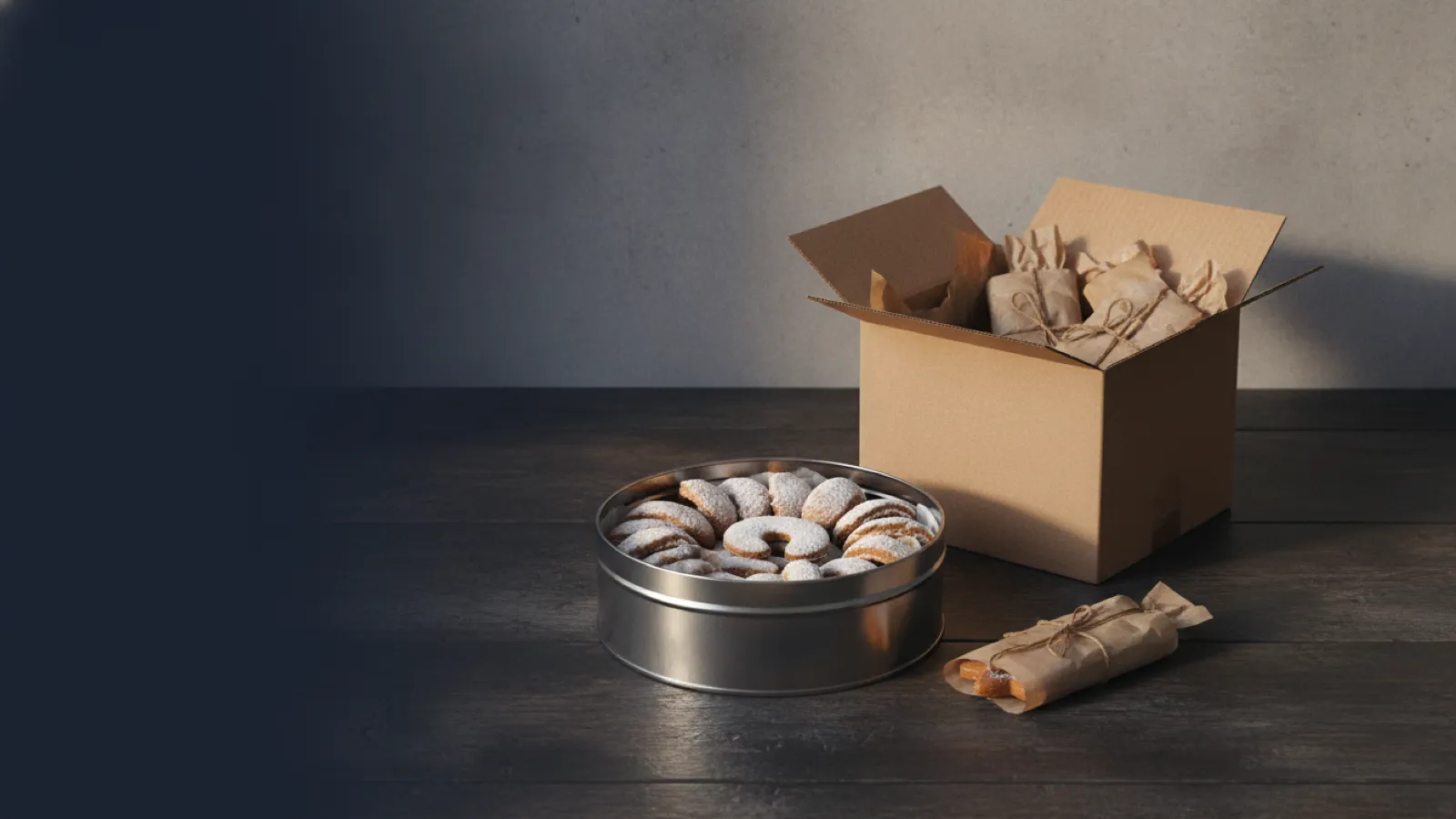
Home-baked Christmas biscuits for family in London, a box of chocolates for a friend in Toronto, a local sausage for someone who moved to New York. Within the EU, sending food by parcel is mostly a question of good packing. Once the parcel leaves the EU, what the food is made of starts to matter, and meat and dairy are where most shipments run into trouble.
This guide covers what you can and cannot send, how to pack baked goods so they arrive in one piece, and the current rules for the UK, the USA and Canada. If you are still working out when to post, check the Christmas shipping deadlines.
What you can send and what to avoid
The basic rule: only send food that will survive several days in a box at room temperature. An international parcel can easily spend a week or more in transit, and nobody refrigerates it on the way. Every carrier also has its own list of prohibited goods; see the prohibited items guide or check quickly with the prohibited items tool.
| Food | Within the EU | Outside the EU (UK, USA, Canada) |
|---|---|---|
| Dry biscuits, gingerbread, cookies | Fine | Usually fine if they contain no meat |
| Chocolate, sweets | Fine (watch the heat) | Usually fine |
| Coffee, tea, spices | Fine | Usually fine in original packaging |
| Cakes with fresh cream or custard | Not recommended, they spoil quickly | Do not send |
| Cheese, butter, dairy | Only shelf-stable and well packed | Not allowed into the UK from the EU, risky elsewhere |
| Sausages, ham, cured meat | Only shelf-stable and well packed | Not allowed into the UK from the EU, avoid for the USA and Canada |
Always describe the contents honestly. If customs opens the parcel and finds food that is missing from the declaration, it will be seized, and an inaccurate description will not help with a damage claim either.
How to pack baked goods so they don’t arrive as crumbs
Shortbread and butter biscuits are fragile, and gingerbread dries out. Parcels on a sorting line get dropped and stacked under heavier boxes, so pack accordingly:
- Use a tin or a rigid plastic container. Pack the biscuits tightly and fill gaps with baking paper. A cardboard gift box will not protect them.
- Keep each type separate. Soft, moist biscuits make crisp ones go soggy and the flavours mix. Separate them with bags or paper.
- Put the container in a bag. If anything spills or leaks grease, it stays inside and does not damage other parcels.
- Box with padding. Leave a few centimetres around the container for paper or bubble wrap. Shake the box: nothing should move.
- Keep chocolate away from heat. Winter makes this easier; in summer, avoid sending chocolate altogether.
- Make the contents obvious. Keep shop-bought food in its original labelled packaging; label homemade food and add the date.
For general advice see how to pack a parcel, and for jars of jam or honey how to pack fragile items.
Sending food to the UK from the EU
The UK currently has the strictest rules for food coming from the EU. According to GOV.UK, recent and ongoing animal disease outbreaks in the EU mean restrictions on most meat and all dairy products. You cannot bring in:
- meat: pork, beef, lamb, mutton, goat and venison,
- products made from these meats, such as sausages,
- dairy: cheese, milk, butter and yoghurt.
On the other hand, the same guidance lists bread (but not sandwiches filled with meat or dairy), cakes without fresh cream, biscuits, and chocolate and confectionery not made with a lot of unprocessed dairy as unrestricted. Traditional Christmas biscuits will usually be fine; sausage and homemade cheese will not.
One caveat: the UK guidance refers to food for personal use and does not mention parcels explicitly. Do not count on a loophole and leave meat and dairy out of UK-bound parcels entirely. Gift allowances and declarations are covered in sending gifts abroad and customs and sending parcels to the UK after Brexit.
Sending food to the USA and Canada
USA: the FDA requires prior notice for imported food, but gifts are treated more leniently. According to the FDA, when food is sent by one individual to another for non-commercial purposes, the FDA and CBP typically take no regulatory action if prior notice is missing. Meat is a different story: US Customs and Border Protection lists meats among prohibited or restricted agricultural items, and undeclared prohibited items are confiscated. Biscuits yes, salami no. More on transatlantic parcels in shipping a parcel to the USA.
Canada: the Canadian Food Inspection Agency sets quantity limits on food for personal use, and they apply to goods sent from abroad too. Some animal products cannot be sent by mail or courier at all. Stick to biscuits, chocolate and shop-bought shelf-stable sweets, and leave meat out.
For all three countries, attach a customs declaration with a precise description: not just “food” but, for example, “homemade Christmas cookies, 1 kg”. You can prepare it with the CN22 / CN23 generator.
Checklist before you post
Send only shelf-stable food, pack biscuits in a tin inside a padded box, and check the ingredients for anything leaving the EU. Keep meat and dairy out of non-EU parcels, and out of UK parcels completely. And post early: biscuits that arrive after New Year are far less welcome.
Quick facts
Sending Food by Parcel Abroad: What Gets Through and How to Pack It
Updated
Summary
You can send biscuits, gingerbread, chocolate and other long-life food by parcel, but for shipments leaving the EU the ingredients and the destination country decide what gets through. According to GOV.UK, meat (pork, beef, lamb, sausages) and dairy products (cheese, milk, butter, yoghurt) from the EU currently cannot be brought into Great Britain because of animal disease outbreaks, while bread, biscuits, cakes without fresh cream and chocolate or confectionery without a lot of unprocessed dairy are unrestricted. The UK guidance covers food for personal use and does not mention parcels explicitly, so the safest choice is not to post meat or dairy at all. For the USA, the FDA and CBP typically take no action over missing prior notice when one individual sends food to another for non-commercial purposes, but meat is listed among prohibited or restricted agricultural items. Canada sets quantity limits on food for personal use, and some animal products cannot be sent by mail or courier. Only send shelf-stable food, packed firmly and described accurately on the customs declaration.
- UK from the EU — not allowed
- Pork, beef, lamb, sausages, cheese, milk, butter, yoghurt
- UK — unrestricted
- Bread, biscuits, cakes without fresh cream, chocolate and confectionery
- USA — gifts
- Food sent individual to individual: FDA and CBP typically take no action over missing prior notice
- USA — meat
- Listed among prohibited or restricted agricultural items (CBP)
- Canada
- Personal-use quantity limits; some animal products cannot go by mail or courier